
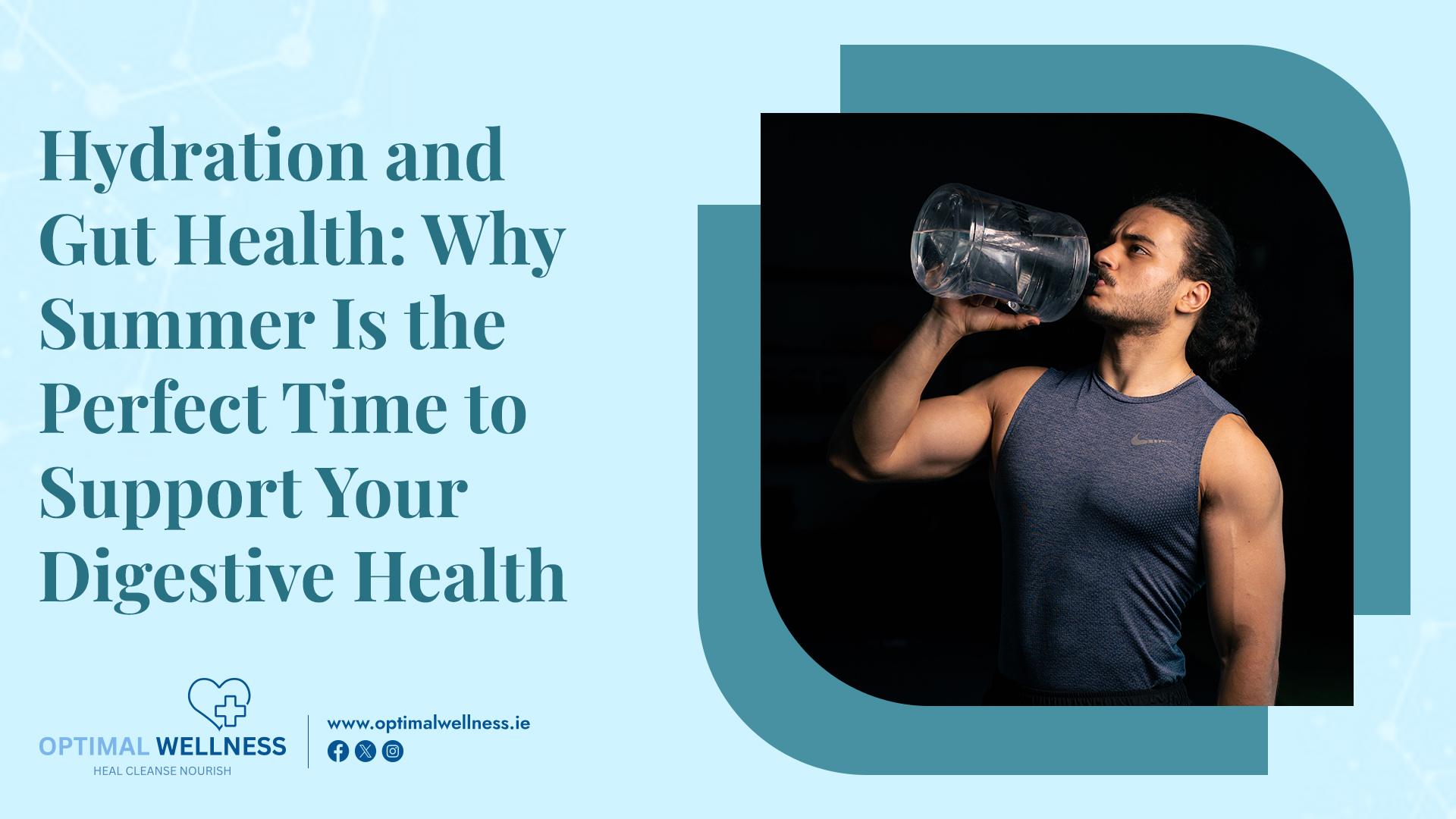
Summer often inspires us to focus on our wellbeing. Longer days, warmer weather and an abundance of fresh seasonal produce make it easier to spend time outdoors, stay active and enjoy healthier meals. However, rising temperatures also increase our body’s need for hydration, and many people don’t realise just how closely water intake is linked to digestive health.
If you’ve ever experienced bloating, sluggish digestion, constipation or low energy during the warmer months, dehydration may be playing a bigger role than you think.
Hydration is one of the simplest yet most powerful ways to support your digestive system. When combined with balanced nutrition, regular movement and good lifestyle habits, it helps your body function efficiently and supports overall wellbeing.
Hydration and Gut Health – Why Hydration Matters for Digestive Health
Water plays an essential role in almost every function of the body, including digestion.
From the moment you begin eating, your digestive system relies on fluids to break down food, absorb nutrients and move waste efficiently through the intestines. Without adequate hydration, digestion can become slower, making bowel movements more difficult and increasing the likelihood of discomfort.
Proper hydration helps:
- Keep stools soft and easier to pass
- Support regular bowel movements
- Aid nutrient absorption
- Maintain healthy digestive enzymes
- Support the balance of your gut microbiome
- Reduce the likelihood of constipation
Many people assume they only need more water if they’re exercising heavily, but simply spending more time in the summer heat increases fluid loss through perspiration.
The Connection Between Dehydration and Bloating
It may seem surprising, but drinking too little water can actually contribute to bloating.
When the body senses dehydration, it naturally begins retaining water as a protective mechanism. This water retention can leave you feeling puffy and uncomfortable.
At the same time, dehydration slows the movement of food and waste through the digestive tract. This slower transit allows more fermentation to occur within the intestines, potentially leading to increased gas production and abdominal discomfort.
If you’re experiencing occasional bloating, increasing your water intake alongside eating fibre-rich foods gradually and staying active may help improve symptoms.
Summer Eating Can Challenge Digestion
Summer is full of celebrations, holidays, picnics and barbecues. While enjoying these occasions is an important part of life, changes in eating habits can sometimes affect digestion.
Common summer habits that may contribute to digestive discomfort include:
- Eating larger meals than usual
- Drinking less water while travelling
- Increased alcohol consumption
- More processed or convenience foods
- Less consistent meal routines
These changes don’t mean you have to avoid enjoying yourself. Instead, simple habits can help support digestion throughout the season.
Hydration and Gut Health – Simple Ways to Stay Hydrated
Hydration doesn’t have to mean forcing yourself to drink litres of plain water every day.
Here are some practical ways to increase your fluid intake:
Start your day with water
Drinking a glass of water after waking helps replace fluids lost overnight and prepares your digestive system for the day ahead.
Eat water-rich foods
Many fruits and vegetables naturally contain high amounts of water.
Excellent choices include:
- Watermelon
- Cucumber
- Strawberries
- Lettuce
- Celery
- Tomatoes
- Oranges
These foods also provide valuable vitamins, minerals and antioxidants that support overall health.
Carry a reusable water bottle
Keeping water nearby makes it much easier to drink consistently throughout the day.
Flavour your water naturally
If plain water feels boring, try adding:
- Lemon
- Lime
- Fresh mint
- Cucumber slices
- Fresh berries
This can make staying hydrated much more enjoyable.
Nutrition and Hydration Work Together
Good digestion isn’t just about drinking enough water.
A balanced diet rich in whole foods provides fibre, vitamins and minerals that help keep your digestive system functioning well.
Aim to include:
Fibre-rich foods
- Oats
- Lentils
- Beans
- Wholegrains
- Fruits
- Vegetables
- Nuts
- Seeds
Healthy fats
Healthy fats support nutrient absorption and contribute to overall digestive wellbeing.
Choose:
- Olive oil
- Avocados
- Nuts
- Seeds
Fermented foods
Foods containing live cultures may help support a diverse gut microbiome.
Examples include:
- Natural yoghurt
- Kefir
- Sauerkraut
- Kimchi
Not everyone tolerates fermented foods equally well, so introduce them gradually if they’re new to your diet.
Hydration and Gut Health – The Importance of Regular Movement
Physical activity encourages natural movement within the digestive tract.
Even moderate exercise such as:
- Walking
- Swimming
- Cycling
- Yoga
can help support regular bowel movements while improving overall health.
Summer provides an ideal opportunity to enjoy outdoor movement, whether that’s an evening walk or spending more time gardening. Get in touch with Optimal wellness today.