
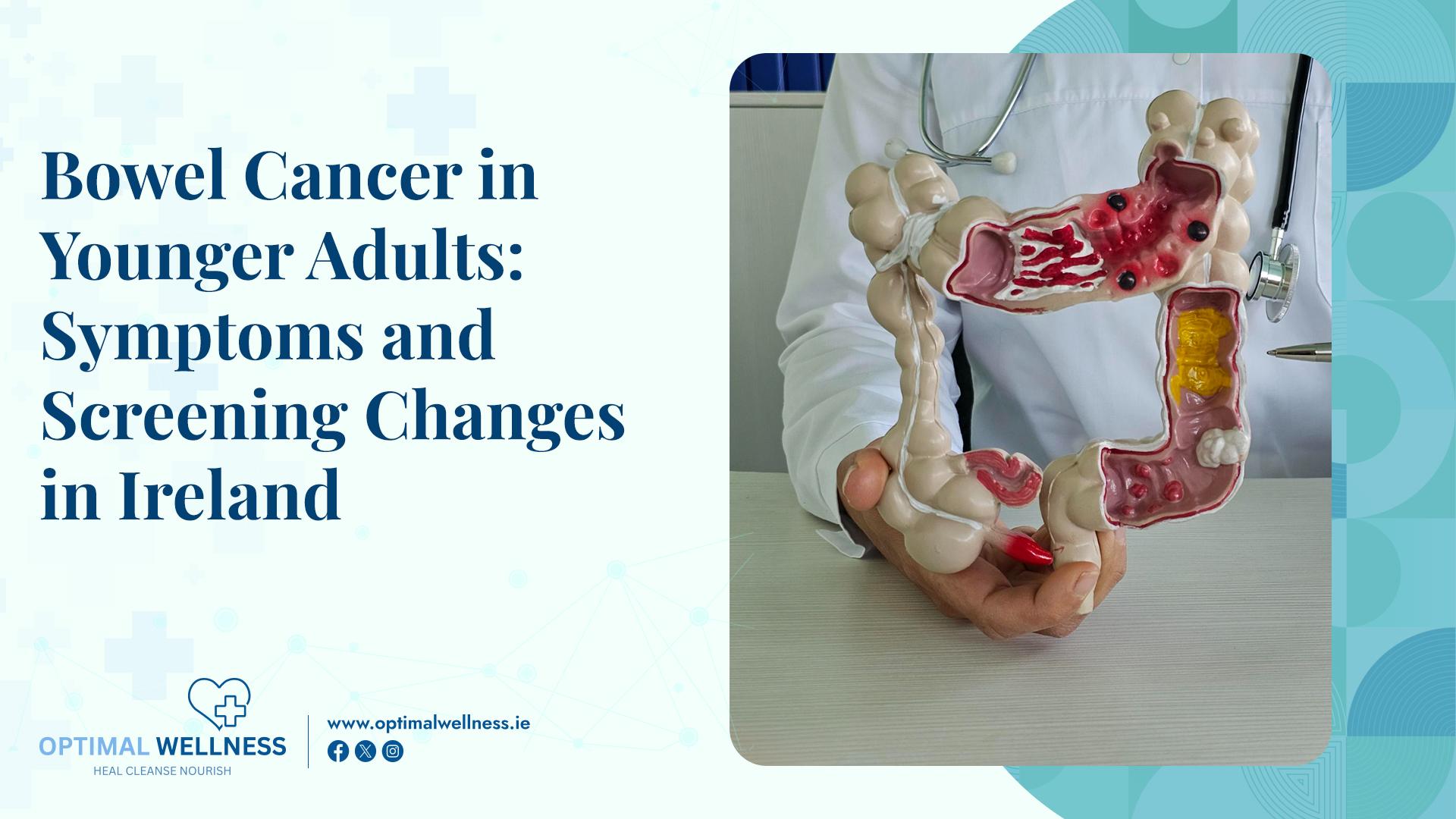
You notice a change, but explain it away. Work has been stressful. Meals have been irregular. You are too young for anything serious, and mentioning your bowel habits feels awkward.
That sequence is familiar to many people with digestive symptoms. Most will have an explanation other than cancer. The important point is that persistent changes deserve attention rather than a confident guess.
Bowel cancer in younger adults has returned to Irish headlines, alongside developments in the national screening programme. Both subjects are worth understanding, but they should not be confused.
Screening is designed for people without symptoms. Investigating symptoms is a separate clinical process, and it is relevant even when you are outside the screening age range or have previously received a reassuring test result.
Why the age conversation has changed
Bowel cancer is more common in older adults, but younger people can develop it too. International research and Irish reporting have drawn attention to increasing diagnoses in younger age groups.
This does not mean every younger person with bloating has a high probability of cancer. It means age alone should not be used to dismiss a symptom that needs assessment.
The reasons behind changing patterns remain under investigation. Diet, environment, metabolic factors and other influences are being studied, but no single explanation accounts for every case.
It is particularly unhelpful to suggest that an individual caused their cancer by making the wrong food choices. Risk research concerns patterns across populations, not a simple judgement about one person’s life.
What changed in BowelScreen during 2026
From April 2026, Ireland’s BowelScreen programme extended its eligible age range to people aged 57 to 71. The HSE describes invitations being issued as people become due for their screening round.
In April, a recommendation to extend screening to ages 50 to 54 was also approved. Approval is different from the extension being available immediately to everyone in that group.
As checked in October 2026, the public programme information still identifies 57 to 71 as the current range. Readers should check the latest HSE guidance because eligibility and implementation can change.
If you are outside the current range and have symptoms or a relevant family history, speak to your GP rather than waiting to become eligible.
The unusual thing about screening and polyps
Screening is not only about finding a cancer that already exists. It can lead to the identification and removal of certain polyps before they develop into cancer.
Polyps are growths in the bowel lining. Not all become cancer, but some can change over time. Finding them provides an opportunity for prevention as well as early diagnosis.
This helps explain why participating when invited can matter even if you feel entirely well. The absence of discomfort does not make screening unnecessary.
It also explains why the screening process has several steps. A home test is used to identify people who may need further investigation, rather than giving a complete picture of the bowel itself.
The benefit comes from the whole pathway, including appropriate follow up. Returning a kit is therefore the beginning of a process, not a promise that every possible problem has been excluded.
What the home test looks for
BowelScreen uses a faecal immunochemical test, usually shortened to FIT. It checks a small stool sample for traces of blood that may not be visible.
An abnormal result does not automatically mean cancer. It means further assessment may be needed to understand why blood was detected.
A result that does not trigger further screening investigation also cannot guarantee that cancer is absent. Tests have limitations, and symptoms still need attention.
Follow the instructions supplied with the kit, including how to collect and return the sample. You do not need to invent extra preparation based on social media advice.
If you are unsure about a step, contact the programme for clarification. Embarrassment or a minor practical question should not become the reason a useful test remains unopened in a drawer.
Which symptoms deserve a conversation?
Blood in the stool, an ongoing change in bowel habit, unexplained weight loss or persistent abdominal discomfort should be discussed with a clinician. Unexplained tiredness or anaemia may also require investigation.
These symptoms can occur for several reasons. Haemorrhoids, infections and other conditions may explain them, but the cause should not be assumed without considering the history.
Describe whether the change is new, how long it has lasted and what is different from your usual pattern. Frequency, stool consistency and difficulty emptying can all be relevant.
Do not wait for symptoms to become dramatic before asking for advice. A persistent change can be important even if you are still working, exercising and managing ordinary life.
Significant bleeding, severe pain, fainting or symptoms suggesting an obstruction require urgent medical assessment. Those situations should not wait for a routine nutrition appointment.
The appointment is easier with specific information
Before speaking to your GP, think about the clearest way to describe the concern. For example, you might explain that your bowel pattern changed several weeks ago and has not returned to normal.
Mention blood, weight changes, pain and fatigue if present. Include relevant medicines and any previous investigations.
There is no need to present a self diagnosis. Your job is to report what you have noticed; the clinician’s job is to assess what it may mean and what happens next.
If symptoms continue after initial treatment or reassurance, return and explain that they are still present. Ask what the follow up plan is and which changes should prompt earlier review.
Clear communication can reduce the chance that everyone assumes the issue has resolved when the person experiencing it is still concerned.
Family History can change the Conversation
Tell your GP if close relatives have had bowel cancer, particularly when diagnosis occurred at a younger age. Include which relative was affected and their approximate age at diagnosis if known.
Certain inherited conditions, including Lynch syndrome, can increase risk and may require a different surveillance plan. A clinician can assess whether specialist or genetic advice is relevant.
You do not need to know every detail before raising the issue. Start with what you know, and ask whether further family information would help.
A standard population screening invitation may not be the whole answer for someone with increased inherited risk. Personal assessment matters.
Equally, having no known family history does not make persistent symptoms irrelevant. Many people diagnosed with bowel cancer do not have a clear inherited explanation, so both symptoms and background need appropriate consideration.
Prevention is useful without becoming a promise
A pattern of eating that includes wholegrains and plant foods, along with suitable physical activity, can support general health and help reduce some cancer risks.
Limiting processed meat and considering alcohol intake are also part of established prevention advice. Avoiding smoking and managing weight appropriately can contribute to the wider picture.
However, no dietary pattern guarantees protection. People can make sensible choices and still develop cancer, while the effect of any one meal cannot be isolated in that way.
Choose practical improvements that are appropriate to your health and circumstances. Prevention advice should encourage useful action, not create the belief that illness proves a failure of discipline.
Screening and symptom assessment remain important alongside healthy habits. Eating well is not a substitute for participating in an appropriate programme or seeking help when something changes.
Do not Confuse a cleanse with an investigation
A colonic, detox drink or change in diet cannot diagnose bowel cancer. Feeling temporarily less bloated also cannot establish that the cause of a persistent symptom has been resolved.
If you are preparing for a colonoscopy, follow the instructions provided by the clinical team. Bowel preparation is part of a specific medical investigation and should not be replaced with a wellness procedure.
Tell any practitioner you consult about unexplained bleeding or ongoing changes. Appropriate referral is a sign of responsible care, not an obstacle to treatment.
This distinction is especially important when someone is searching for relief and would prefer an explanation that feels familiar or less frightening. Comfort matters, but clarity about the cause matters too.
You deserve support that recognises when a symptom needs investigation before it becomes part of a general gut health programme.
One useful action is better than endless searching
If you are eligible and have no symptoms, check your BowelScreen registration and respond when invited. If you have symptoms, contact your GP and explain them directly.
If family history concerns you, arrange a conversation about that rather than relying on the standard age threshold. Each situation has a practical next step.
At Optimal Wellness in Templeogue, nutritional therapy can support eating habits within an appropriate care plan. New or unexplained bowel symptoms require medical assessment before they are treated as a routine wellness concern.
The purpose of greater awareness is not to make everyone afraid of the bathroom. It is to make persistent changes easier to recognise and discuss. A calm, specific conversation can be the most useful response to a worrying headline.