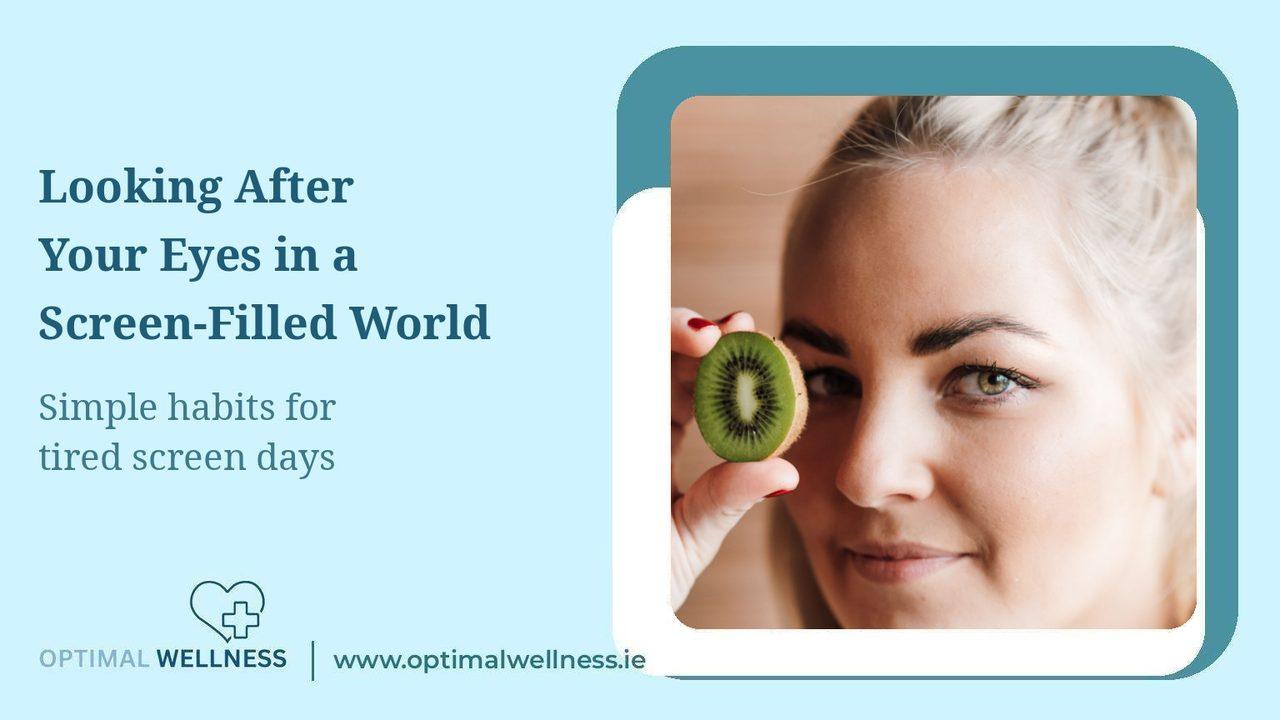
We look at screens for hours every day. Phones, laptops, TVs. By evening, many of us notice tired, dry or achy eyes. The good news is that a few simple habits make a real difference.
Why do our eyes feel tired?
When we focus on a screen, we blink less. Less blinking means drier eyes. Holding focus at one distance for a long time also tires the small muscles inside the eye. This is often called digital eye strain. It is uncomfortable, and everyday habits can ease it.
Simple habits for screen days
- Try the 20-20-20 rule. Every 20 minutes, look at something 20 feet (about 6 metres) away for 20 seconds.
- Blink often and fully. Add a few deliberate blinks when you are concentrating.
- Keep your screen an arm’s length away, slightly below eye level.
- Match your screen brightness to the room, and avoid glare.
- Turn down screens before bed to wind down for sleep.
What about special glasses?
Blue-light glasses are popular. Research reviews so far show they make little difference to eye comfort, so they are not a must-have. The best glasses for you are the ones with the right prescription. A regular eye test with your optician is the most useful step you can take, especially if you spend long hours at a screen.
Eating for your eyes
Your eyes love colour. Leafy greens such as spinach and kale contain lutein and zeaxanthin, which are found naturally in the part of the eye used for sharp central vision. Oily fish like salmon and mackerel provide omega-3 fats. Carrots, peppers, oranges and berries bring vitamins A and C. Staying hydrated also helps keep eyes comfortable. Aim for a varied plate and ask your GP or optician before starting any supplement.
Gut health and whole-body wellbeing
At Optimal Wellness we look at the whole person. Good digestion, steady energy and healthy eating habits all sit together as part of feeling well. Colon hydrotherapy is one way our clients support their digestive comfort and feel lighter and more energised as part of a balanced lifestyle.
A word on iridology
Iridology is a traditional practice in which the patterns of the iris are read as a map of the body. Many people find it interesting as a conversation about overall wellbeing. It is not a medical test, so for any questions about your eyesight, an optician or eye doctor is the right person to see.
Small steps, big comfort
Take screen breaks, eat the rainbow, look after your digestion and book regular eye tests. Your eyes work hard for you every day.
Always follow the advice of your GP or eye care professional. This article is for general information.
Thinking about booking?
You can book a nutritional therapy consultation or a colon hydrotherapy session online at optimalwellness.ie/booking, at a time that suits you, including evenings.