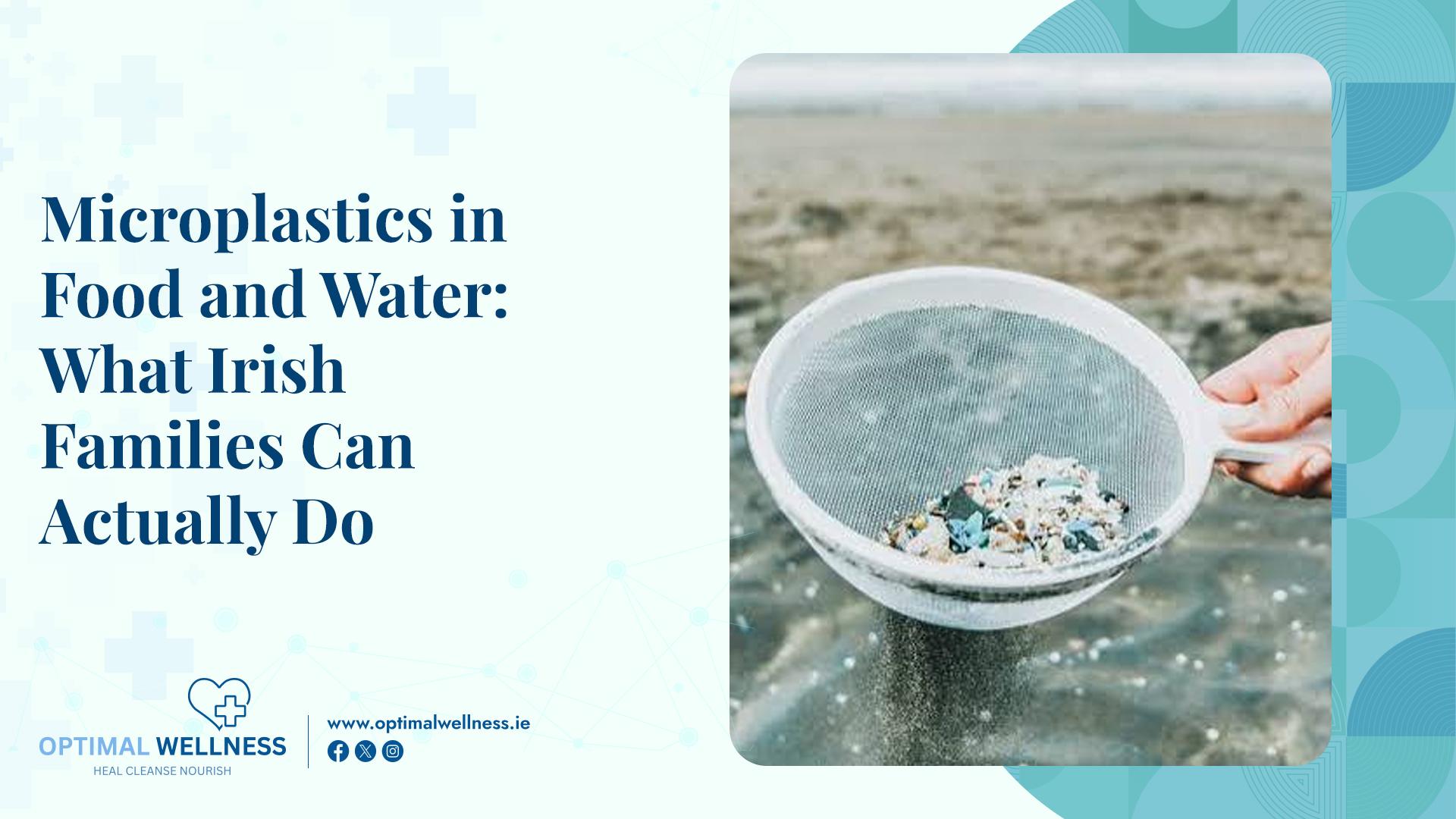
A headline says plastic particles have been found in food. Another says they have been detected in human tissue. By the time you reach your lunchbox, even the water bottle looks suspicious.
Microplastics have become one of the most unsettling subjects in modern health reporting. The concern is understandable. Nobody wants unwanted particles in their dinner, and the idea of invisible exposure can make ordinary choices feel inadequate.
Yet useful advice requires more than a frightening image and a list of products to replace. We need to distinguish what scientists have measured, what remains uncertain and which practical changes make sense.
For Irish households, the goal is informed action without turning every meal into an environmental investigation or an expensive attempt to achieve impossible purity.
What microplastics actually are
Microplastics are small plastic particles. Definitions differ slightly between scientific frameworks, but the term generally covers particles below five millimetres. Nanoplastics are smaller still.
They can originate from larger plastic objects breaking down or from processes that release small particles directly. The environment contains many potential sources.
Food and drinking water are part of the exposure discussion, alongside air and dust. This means the subject extends beyond the container holding your lunch.
Particle size, shape, material and associated chemicals can all matter when assessing possible effects. Counting particles alone does not provide a complete description of a potential hazard.
That is one reason two studies can produce apparently conflicting headlines. They may be measuring different types or sizes of particles using different methods, rather than asking precisely the same question.
Why detection is different from a demonstrated harm?
Finding a substance or particle establishes that it was detected under the conditions of a particular investigation. It does not automatically establish the health effect of that exposure.
Researchers still need to understand amount, route, duration and biological behaviour. They also need methods that reliably distinguish the material of interest from contamination introduced during collection or analysis.
The US Food and Drug Administration notes that current evidence does not demonstrate that levels detected in food pose a human health risk. That is a statement about the available evidence, not a declaration that every possible exposure is harmless.
Laboratory and animal studies can identify mechanisms worth investigating. Their results cannot always be translated directly into the effect of eating an ordinary meal.
Keeping these distinctions clear allows concern and scientific uncertainty to coexist without exaggerating either.
Ireland is paying attention
The European Food Safety Authority identifies microplastics in food as a prominent concern among consumers in several countries, including Ireland.
In 2026, EFSA also described work towards a new scientific opinion on potential health risks, with completion scheduled for the end of 2027. The assessment is intended to examine exposure and biological effects using the available evidence.
Irish researchers are contributing to the wider field. Work associated with Trinity College Dublin has examined particle release from plastic products used in food preparation, while food research organisations are studying exposure and measurement.
This is useful context for the public conversation. It shows that the subject is receiving attention beyond social media, while reminding us that important questions remain open.
The unexpected finding about glass bottles
A French food safety investigation reported an unexpected source of particles in some drinks sold in glass bottles: paint on the metal caps.
Researchers linked particles found in certain beverages with the colour and material of the cap coating. The finding challenged the simple assumption that the container material alone predicts exposure.
It did not establish that every glass bottle is worse than every plastic bottle. Different beverages, closures and production processes produced different results.
The wider lesson is useful. Packaging is a system, with lids, liners, handling and filling processes as well as the main container.
Replacing one material can solve one problem while leaving another unexamined. This does not make sensible substitutions pointless. It explains why sweeping claims about the perfect bottle should be treated carefully.
What does this mean for gut health?
Scientists are investigating whether plastic particles can influence intestinal cells, inflammation or microbial communities. Some experimental findings suggest pathways that deserve further study.
However, a person with bloating cannot currently infer that microplastics are the cause. Nor can ordinary symptoms tell you how much exposure you have had.
This matters because the topic can become a new explanation for almost anything. Fatigue, abdominal discomfort and changes in bowel habit are common and have many possible causes.
Seek an appropriate assessment for persistent symptoms rather than assuming an invisible pollutant explains them. Identifying a treatable medical or dietary issue should not be delayed by a theory that cannot currently be confirmed for you.
Microplastic research is important. Using the term as an all purpose personal diagnosis does not help either the science or the person seeking relief.
Start with how you use containers
Follow the manufacturer’s instructions for food storage, heating and cleaning. A container designed for cold food may not be intended for hot liquids or microwave use.
If you prefer, transfer food to a suitable glass or ceramic dish before heating it. Make sure the dish is intended for that purpose and observe ordinary precautions against burns or breakage.
Replace damaged containers when appropriate rather than continuing to use items with cracks, poor seals or badly worn surfaces.
These steps are practical housekeeping. They should not be sold as a quantified treatment or a guarantee of eliminating particle exposure.
There is also no need to discard every useful kitchen item overnight. Consider what needs replacing anyway and make deliberate choices as equipment wears out. Gradual change is often more affordable and less wasteful than a rushed clear out.
Be realistic about drinking water
Both tap and bottled water appear in microplastic research. Study methods and local conditions vary, so a headline from one location cannot rank every Irish water source.
Follow public water quality advice and any local notices. If an official boil water notice is in place, that guidance takes priority over general preferences about packaging.
A reusable bottle can be convenient and reduce disposable waste. Clean it appropriately, dry it as recommended and choose one you will actually use.
Filters differ substantially in their design and purpose. Check which contaminants a device is tested to reduce, what maintenance it requires and whether the claims are independently supported.
An expensive filter is not automatically a better choice, and neglecting replacement or cleaning can create different problems. Choose equipment for a clear reason rather than as an immediate reaction to a frightening headline.
Do not restrict nutritious foods out of fear
Reports have detected particles in a range of foods. That does not provide a sound basis for removing broad food groups from your diet.
Avoiding fish, vegetables, salt and drinking water because each appears in a study would quickly create a far more immediate problem: an unnecessarily restricted pattern of eating.
Keep familiar food safety practices in place. Wash produce appropriately, store food correctly and follow reliable guidance about cooking and preparation.
There is no established home washing technique that makes the entire food supply free of microplastics. Claims that a particular soak removes all contaminants should be examined carefully.
Nutritional adequacy still matters while scientists investigate environmental exposure. A varied diet should not become collateral damage in the search for a level of control that no household can realistically achieve.
Watch for the new detox sales pitch
Environmental concern creates a ready audience for products promising to remove plastic from the body. These may include supplements, special drinks or cleansing packages.
Ask what has actually been demonstrated in people. Does the product reduce a measured exposure? Does that reduction improve a meaningful health outcome? Is there a reliable way to establish the claim?
At present, there is no established dietary supplement or colonic treatment proven to clear microplastics from the body. A confident promise should not be mistaken for a completed clinical trial.
Products can also introduce costs, side effects or interactions while distracting from ordinary care. Discuss any supplement you are considering with an appropriate professional, particularly if you take medication.
Act deliberately.
Think beyond the kitchen cupboard
Plastic pollution is also a manufacturing, waste management and environmental issue. Individual shopping choices form only one part of the response.
Reducing unnecessary disposable items, using existing products sensibly and supporting better waste practices can be worthwhile without claiming a precise health benefit for each action.
Keep the distinction between environmental aims and medical outcomes clear. A choice can be environmentally responsible even when its effect on your personal exposure has not been measured.
At Optimal Wellness, nutritional support focuses on helping you eat adequately and make informed decisions amid changing health information. If environmental headlines have left you anxious about food, a grounded discussion can help restore perspective.
You can take sensible steps while accepting that research is unfinished. The aim is a functioning kitchen, a nourishing diet and attention to reliable information, rather than trying to make everyday life perfectly particle free.