
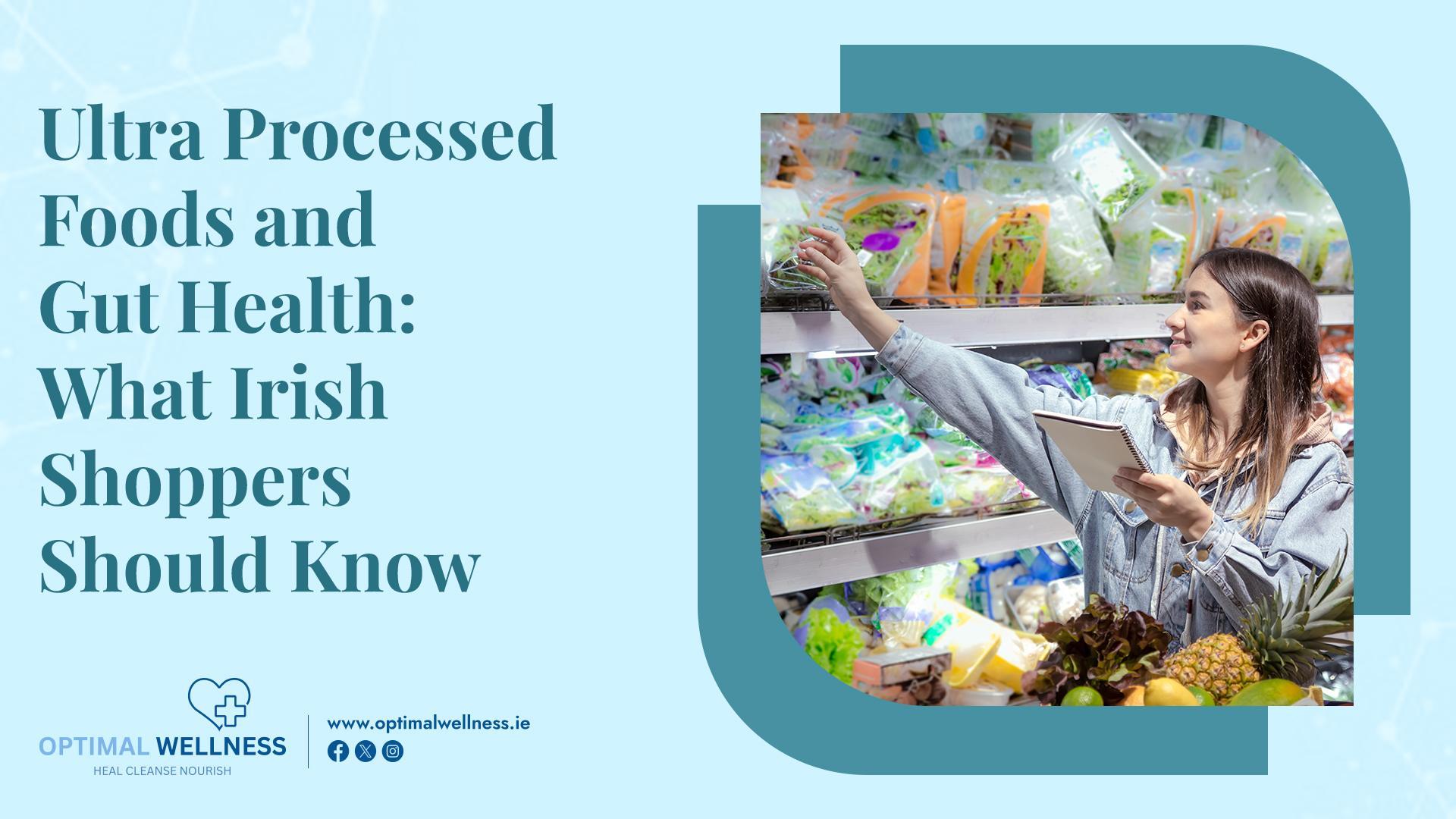
You pick up a loaf of bread, inspect the ingredients and immediately wonder whether breakfast has become a health mistake. A few shelves later, a protein snack looks virtuous on the front and confusing on the back.
The debate about ultra processed foods has made shopping feel surprisingly complicated. Headlines warn about disease, social media offers strict rules, and ordinary families are left deciding whether convenience itself is the problem.
There are reasons to take the research seriously. There are also reasons to avoid turning it into a fear of every packet, tin or freezer bag.
For Irish households balancing food prices, work and family life, the useful question is practical. Which changes are likely to improve your overall diet without making meals unaffordable or exhausting?
Processed does not mean the same thing as ultra processed
Food processing includes activities as ordinary as freezing, drying, pasteurising and canning. These can improve safety, reduce waste and make food easier to access.
Frozen vegetables and tinned fish are processed. That alone is not a reason to avoid them. In fact, they can make it easier to prepare a nourishing meal when time is limited.
Ultra processed foods are commonly described using the NOVA classification. This considers the nature and purpose of processing, including industrial formulations and certain ingredients or techniques.
The category contains many different products. That breadth is one reason scientists continue to discuss how best to use the classification in dietary guidance.
The unusual experiment that changed the debate
In a controlled study published in 2019, twenty adults lived at a research centre and were given either an ultra processed or an unprocessed diet before switching to the other.
The diets offered were designed to be comparable in several nutritional respects. Participants could eat as much as they wanted.
During the ultra processed period, they consumed about 500 additional calories daily on average and gained weight. During the other period, they lost weight.
This was an important finding because it moved beyond asking people to recall what they ate. Researchers controlled the food offered and directly observed the outcome.
However, the study was small and short. It did not prove that every food in the ultra processed category has the same effect. It also could not settle exactly which features of the meals explained the difference.
Why newer evidence adds another layer
A trial published in Nature Medicine in 2025 compared two diets that followed UK healthy eating guidance. One relied on minimally processed foods, while the other included ultra processed foods.
Both groups lost weight, but the minimally processed diet produced greater average weight loss. This suggests that processing may matter even within diets constructed to meet familiar nutritional recommendations.
It is useful evidence, but its boundaries still matter. The foods were provided to participants, which is different from shopping, budgeting and cooking everything independently.
Weight change was also a measured outcome, not proof that every digestive symptom would improve. A person hoping to resolve abdominal pain needs more than a broad food category to guide care.
The study strengthens the case for examining overall food patterns. It does not justify treating one packaged lunch as a health emergency.
What scientists are still trying to explain
Several possible explanations are being investigated. These include energy density, eating speed, texture, combinations of ingredients and the way foods influence appetite.
Think about how quickly a soft snack can disappear compared with a meal that requires more chewing. The eating experience may affect intake as well as the nutritional information printed on the label.
However, plausible explanations are not automatically proven explanations. Much of the research connecting ultra processed food intake with chronic disease is observational.
Observational studies can identify associations, but people who eat different diets may also differ in income, smoking, sleep, activity and other factors. Researchers attempt to account for these differences, although uncertainty remains.
Randomised trials help address some questions more directly. Different forms of research therefore contribute different pieces of the picture, rather than offering one dramatic answer to every concern.
Gut health claims need particular care
It is tempting to explain every effect of an ultra processed diet through the microbiome. The gut is a popular subject, and a story about damaged bacteria attracts attention.
Yet evidence about a whole dietary pattern is not the same as evidence that a particular ingredient causes your bloating. Nor does it establish that your intestinal lining has been harmed.
Research into additives and microbial responses is developing. Findings from laboratory or animal experiments need careful interpretation before they become advice for an individual shopper.
If a food repeatedly produces symptoms, investigate the specific situation. Portion size, lactose, fermentable carbohydrates, sweeteners or meal timing may deserve consideration.
The broad term ultra processed can be useful for discussing public health. It can be less useful when trying to identify why one particular breakfast leaves one particular person uncomfortable.
Why a protein claim can distract from the whole product
Protein enriched foods have become prominent in Irish shops. A large protein number can make a product feel like an obvious healthy choice before you consider anything else.
Compare similar products using the nutrition panel and ingredients. Consider what you need the food to provide and whether an ordinary alternative would serve the same purpose.
A specialist snack may be convenient. It may also be expensive, and it does not necessarily offer an advantage over a familiar meal or snack that suits you.
Equally, there is no need to reject a convenient product solely because it has an unfamiliar ingredient. The relevant issue is how it contributes to your overall eating pattern.
Front labels are designed to attract attention. Your shopping decision should consider more than the feature the manufacturer has chosen to place in the largest type.
Make the biggest repeated decision first
You do not have to overhaul the kitchen. Identify the food or drink that appears most frequently and consider whether a practical alternative would improve the pattern.
If lunch usually consists of whatever snack is nearest, creating a dependable lunch option may matter more than debating an occasional dessert. If sweet drinks are frequent, reviewing those might be a useful starting point.
Choose a change you can repeat. A homemade meal twice a week can be more achievable than promising to cook everything from scratch forever.
It can help to frame the decision positively. What would make this meal more nourishing, satisfying or convenient? That question often produces a better answer than asking whether every ingredient is pure enough.
Convenience can support better nutrition
A bag of frozen stir fry vegetables, microwaveable plain rice and an egg can become dinner quickly. Tinned tomatoes can form the base of a sauce when fresh ingredients are scarce.
These examples show why a simplistic ban on processing can work against useful habits. Convenient ingredients can remove the barriers that otherwise lead to skipping a meal or ordering food you did not particularly want.
Batch cooking can help, but it is not compulsory. Some households have limited storage, irregular schedules or little energy available for elaborate preparation.
Build a small list of meals that work with your circumstances. A realistic kitchen plan should account for equipment, budget and the people who need feeding.
The healthiest advice is of limited value if it assumes you have spare hours every evening and a fridge full of ingredients nobody else will eat.
Budget without giving up variety
Compare prices per kilogram or litre when possible, and consider whether a larger pack will actually be used. A bargain becomes less useful if half of it is discarded.
Store cupboard staples can form the basis of meals across several days. Frozen produce allows you to use only the amount needed. Leftovers can save time when cooled and stored safely.
Avoid assuming that a product sold in a health section is the best use of your food budget. Branding and nutritional value are not the same thing.
It may be more helpful to spend on ingredients that improve several ordinary meals than on one premium snack with a long list of promises.
Food choices are shaped by access as well as knowledge. Advice should acknowledge that reality instead of turning financial constraints into another reason for people to feel guilty.
Leave the shopping trolley out of the morality debate
Food shame creates stress without offering a useful shopping strategy.
Give yourself permission to use convenient foods while paying attention to the wider pattern. Notice which products replace nourishing meals, which solve a practical problem and which you simply enjoy occasionally.
Optimal Wellness can help you review those decisions through nutritional therapy, with recommendations that fit ordinary life in Dublin. The aim is to improve what you repeatedly eat, rather than create a growing list of products you fear.
The ultra processed food debate is worth following. The most useful outcome is a more informed, manageable diet that leaves space for budget, pleasure and the realities of feeding yourself well.