
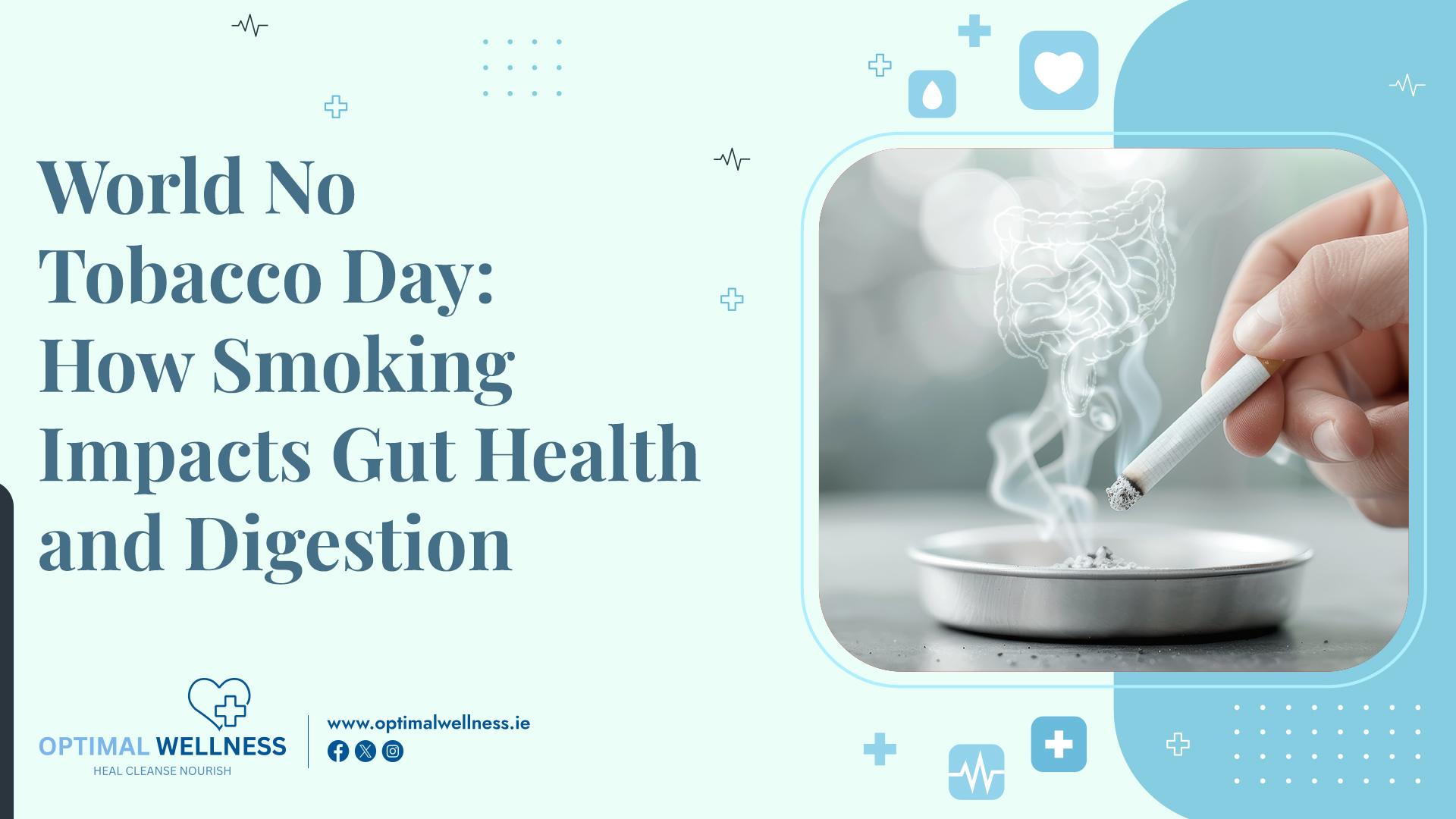
Most people know smoking affects the lungs and heart, but fewer realise the major impact smoking can have on digestive health too. From the mouth all the way through to the colon, smoking influences nearly every part of the digestive system.
World No Tobacco Day on May 31 is an opportunity to look beyond the obvious health risks and understand how smoking may disrupt gut health, nutrient absorption, energy levels, and even the balance of bacteria living inside the body.
Many people are surprised to learn that digestive symptoms such as bloating, acid reflux, sluggish bowels, fatigue, and poor skin health may all be influenced by smoking and lifestyle habits.
The good news? The body has an incredible ability to heal and recover when healthier habits are introduced.
Smoking and the Digestive System
Smoking affects circulation, oxygen delivery, inflammation levels, and the gut microbiome.
Over time, this may contribute to:
- Acid reflux
- Bloating
- Poor nutrient absorption
- Gut inflammation
- Altered bowel habits
- Reduced immune function
- Fatigue
- Premature skin ageing
Smoking can also reduce saliva production, which matters more than many people realise because digestion actually begins in the mouth.
Did you know? Smokers may produce less protective mucus in the digestive tract, which can increase irritation and inflammation.
Smoking and Gut Bacteria
Your digestive tract contains trillions of bacteria that help regulate digestion, immunity, metabolism, and mood.
Scientists now believe smoking may negatively alter the balance of these bacteria.
An unhealthy gut microbiome may contribute to:
- Increased bloating
- Poor digestion
- Cravings
- Low immunity
- Mood changes
- Constipation
This is one reason many people begin focusing on gut health when making positive lifestyle changes.
Nutrients Smokers Often Need More Of
Smoking creates oxidative stress in the body, increasing the demand for antioxidants and key nutrients.
Important nutrients include:
- Vitamin C
- Magnesium
- B vitamins
- Omega-3 fats
- Zinc
Vitamin C is especially important because smoking may significantly reduce levels in the body.
Foods Rich in Vitamin C
- Kiwi fruit
- Strawberries
- Citrus fruits
- Red peppers
- Broccoli
- Pineapple
Quirky Fact:
One red pepper actually contains more vitamin C than an orange.
Smoking, Stress, and Cravings
Many people associate smoking with stress relief, but nicotine can actually place stress on the nervous system and adrenal glands.
This often creates a cycle of dependence, energy crashes, and cravings.
When people stop smoking, they may notice increased cravings for sugar or processed foods. This is very common because the brain is seeking quick dopamine stimulation.
Better Snack Swaps
Instead of sugary snacks, try:
- Apple slices with almond butter
- Greek yoghurt with berries
- Nuts and seeds
- Boiled eggs
- Dark chocolate with walnuts
Balancing blood sugar with protein and healthy fats may help reduce cravings naturally.
Hydration and Detoxification
Hydration plays a major role in supporting circulation, digestion, bowel movements, and energy.
Many people walk around mildly dehydrated without realizing it.
Signs of dehydration may include:
- Headaches
- Constipation
- Dry skin
- Fatigue
- Sugar cravings
Simple Hydration Tips
- Start the morning with warm lemon water
- Carry a reusable water bottle
- Add cucumber or mint to water
- Reduce fizzy drinks and excess caffeine
Did you know? Even mild dehydration can affect concentration and energy levels.
Foods That Support Gut Health Naturally
The body benefits enormously from nutrient-dense whole foods.
Excellent gut-supportive foods include:
- Garlic
- Ginger
- Turmeric
- Beetroot
- Leafy greens
- Berries
- Oily fish
- Avocados
Garlic and onions contain prebiotic fibers that help feed beneficial gut bacteria.
Turmeric contains curcumin, a natural compound studied for its anti-inflammatory properties.
Fiber and Elimination
Smoking, poor diet, and dehydration may all contribute to sluggish digestion and constipation.
Fibre is essential for supporting regular bowel movements and nourishing healthy bacteria.
Top Fibre Foods
- Oats
- Lentils
- Beans
- Chia seeds
- Pears
- Apples
- Vegetables
- Ground flax seeds
Many people increase fibre too quickly without enough water, which may worsen bloating. Gradual increases work best.
World No Tobacco Day – Colon Hydrotherapy and Lifestyle Changes
Many people explore colon hydrotherapy as part of a broader wellness reset when improving lifestyle habits.
Clients often report feeling lighter, less bloated, and more motivated to make healthier food choices afterwards.
Colon hydrotherapy may also encourage awareness around hydration, elimination, and digestive health.
True wellness usually comes from combining multiple healthy habits consistently rather than searching for one quick fix.
Supplements That May Support Wellness
Supplements should complement a balanced diet and healthy lifestyle.
Commonly used wellness supplements include:
- Vitamin C
- Magnesium
- Omega-3 fish oils
- Probiotics
- NAC
- Milk thistle
Magnesium may support relaxation, sleep, and bowel regularity.
Probiotics may help support microbial balance after periods of stress or poor diet.
Movement Matters Too
Exercise helps support circulation, mood, stress management, and digestion.
Even simple movement can make a difference.
Easy ways to move more:
- Walk after meals
- Stretch daily
- Try strength training
- Take outdoor walks
- Use the stairs more often
Did you know? Walking after meals may help support blood sugar balance and digestion.
Sleep and Recovery
Poor sleep affects hunger hormones, cravings, energy, and digestion.
Creating a healthy evening routine may help support recovery and wellbeing.
Better Sleep Habits
- Reduce screens before bed
- Avoid heavy meals late at night
- Drink calming herbal teas
- Keep bedrooms cool and dark
- Stick to a regular sleep schedule
A Simple Wellness Reset Plan
Morning
- Warm lemon water
- Protein-rich breakfast
- Fresh air or short walk
Afternoon
- Balanced lunch with vegetables and protein
- Hydration check
- Healthy snack if needed
Evening
- Light dinner
- Herbal tea
- Relaxation before bed
World No Tobacco Day is not only about quitting smoking — it is also about understanding how lifestyle habits influence every part of health, including digestion and gut balance.
Supporting your body with hydration, nourishing foods, movement, stress management, fiber, and healthy daily habits can make a huge difference to energy and well being over time.
Small changes truly do add up. Get in touch with Optimal Wellness to know more.