
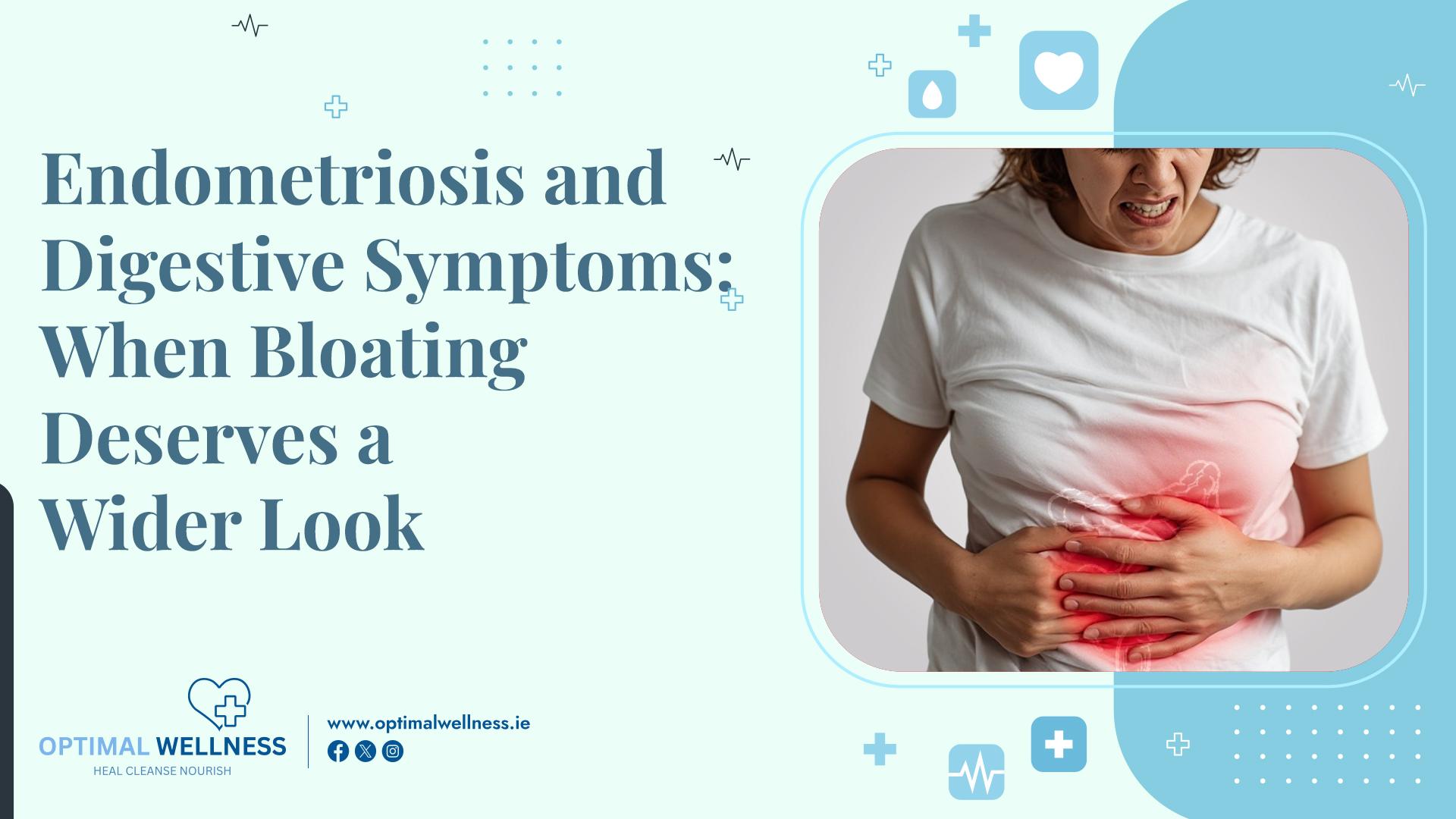
The discomfort seems to have a calendar. Your abdomen swells, bowel movements become painful, and certain days of the month feel harder to manage. You have tried removing foods, but the pattern keeps returning.
Perhaps the explanation has always been IBS. Perhaps the symptoms have been described as ordinary period problems. Neither description necessarily captures the whole picture.
Endometriosis can involve digestive symptoms, and it can coexist with bowel conditions. Understanding that overlap can help someone ask more useful questions instead of moving through an ever longer list of excluded foods.
The subject is receiving renewed attention in Ireland. In September 2026, Irish participation began in a major international study combining detailed symptom information with biological research, including work on the microbiome.
What endometriosis means
Endometriosis involves tissue similar to the lining of the womb growing outside the womb. It can occur in different locations and affect people in different ways.
Symptoms may include painful periods, pelvic pain, pain during or after sex and difficulty becoming pregnant. Digestive or urinary symptoms can also occur.
The intensity of pain does not provide a straightforward measure of how extensive the condition is. A person’s experience deserves attention even when an earlier description of disease sounded mild.
Likewise, a digestive symptom does not establish that endometriosis is present. Many conditions can cause abdominal pain, bloating or bowel changes.
The useful response is to consider the pattern and broader history. A person should not have to choose between a gynaecological explanation and a gastrointestinal one before a proper assessment has taken place.
Why the gut can become part of the story
Endometriosis may affect areas around the bowel, and deeper disease can involve bowel structures. However, digestive symptoms do not automatically indicate direct bowel involvement.
Pain, altered sensitivity and overlapping bowel disorders can complicate the experience. A food that produces modest symptoms at one time may feel much more difficult during a painful flare.
This can make food seem like the entire cause when it is only one part of a larger situation. Equally, assuming hormones explain everything can overlook a separate digestive condition.
Tell your clinician about both sides of the experience. Describe bowel symptoms alongside menstrual pain, pelvic discomfort and any urinary or sexual symptoms.
The aim is a joined assessment that reflects what you live with. Treating each symptom in isolation can leave important connections unnoticed and make care feel unnecessarily fragmented.
The unusual fact about a normal scan
A normal ultrasound does not exclude every form of endometriosis. Some forms, particularly superficial disease, may not be visible on imaging.
Ireland’s national clinical guideline makes this distinction clear. Imaging can be useful, especially in experienced hands, while negative findings do not close every diagnostic possibility.
This matters for someone who has been reassured by a scan but continues to experience substantial symptoms. The next step depends on the clinical picture, rather than an assumption that nothing can be wrong.
It also does not mean everyone with pelvic pain needs surgery. Assessment and treatment involve several options, and a specialist can explain their relevance.
Bring previous results to your appointment and ask what they establish, what they cannot exclude and how persistent symptoms will be addressed. Those questions can make an apparently final answer more informative.
What the new Irish study is investigating
UCC announced Ireland’s participation in ENDO1000 in September 2026. The wider project aims to follow people with endometriosis over two years, bringing together biological samples and information about symptoms and daily life.
APC Microbiome Ireland is leading the microbiome component. Researchers will examine microbial patterns alongside clinical and lifestyle information to investigate variation between people.
Following participants over time is important. A single snapshot cannot show how symptoms, treatments and biological measurements change together.
However, this is research designed to answer questions. It does not mean a commercial microbiome test can currently diagnose endometriosis or identify the right treatment.
The development is encouraging because Irish women are represented in a substantial research effort. Its eventual value will depend on what the studies find and how those findings are tested and translated into care.
Food can influence symptoms without curing the disease
Someone may find that changing meals reduces bloating while pelvic pain remains. That improvement is worthwhile, but it should not be interpreted as proof that the underlying endometriosis has been removed.
Keeping these outcomes separate helps set realistic goals. Nutritional support can aim to maintain adequate intake, identify manageable symptom triggers and make meals less stressful.
Medical treatment may address different aspects of the condition. Decisions about hormonal treatment, pain management or surgery belong with the clinical team.
Be cautious with promises that a diet will dissolve lesions or eliminate the need for treatment. Such claims can create false expectations and imply blame when symptoms persist.
You can take nutrition seriously without assigning it responsibility for everything. A person with endometriosis deserves support across the condition, rather than pressure to solve it through food alone.
What a dietary trial actually found
A Monash University study published in 2025 investigated a low FODMAP diet in 35 women with endometriosis and poorly controlled gastrointestinal symptoms.
This dietary approach reduces certain fermentable carbohydrates for a limited period. In the study, it improved gastrointestinal symptoms for a proportion of participants compared with the control diet.
The finding offers a possible option for symptom management in selected people. It did not show a cure for endometriosis or establish that everyone with the condition should follow the diet.
The approach is restrictive and is usually followed by structured reintroduction and personalisation. Professional guidance can help maintain nutritional adequacy and avoid unnecessary long term exclusions.
If you already avoid many foods, discuss that before beginning another restriction. A treatment intended to reduce discomfort should not leave you afraid to eat or unable to meet your nutritional needs.
A symptom diary should include the cycle
If you only record food, you may miss the strongest pattern. Include the timing of periods, pelvic pain, bowel symptoms and treatments alongside meals.
Use descriptions that communicate the practical effect. Pain when opening the bowels, waking from sleep or missing work are more informative than simply writing bad stomach day.
Brief notes can reveal patterns that appointments might miss.
Avoid assuming that a repeated timing proves one diagnosis. The record provides information for assessment, rather than a final answer.
If you use hormonal treatment that changes bleeding patterns, note that too. Symptoms may not follow a familiar monthly rhythm, and the absence of a neat cycle does not make them unimportant.
Eating during a painful flare
When discomfort is high, cooking and eating can become difficult. A plan that assumes constant enthusiasm for elaborate meals may fail precisely when support is most needed.
Prepare a few simple options you already tolerate. Keep portions manageable and use meals that require little effort. The aim is nourishment during a difficult period, rather than achieving an impressive dietary ideal.
If pain or nausea repeatedly prevents adequate intake, speak with the healthcare team. Significant weight loss or inability to eat comfortably needs attention.
Ask for help with practical tasks where possible. Having food prepared, shopping delivered or a familiar meal available can remove one burden from an already demanding day.
Nutrition support can include planning for these realities. Sometimes the useful change is logistical, not a new ingredient advertised as anti inflammatory.
The emotional cost deserves recognition
Repeated pain and uncertainty can affect work, relationships and confidence. Digestive symptoms add another layer when you worry about bathrooms, visible swelling or discomfort during social events.
These effects are part of the condition’s impact. They should not be dismissed because a person appears well between flares.
Explain what has changed in daily life. Have you stopped exercising, cancelled meals out or begun organising the week around anticipated pain?
That information can help shape care and support. It may also show why a purely dietary answer feels inadequate.
You do not need to demonstrate perfect self management before asking for help. Nor should a persistent symptom be treated as evidence that you lacked discipline with a food plan. Chronic health problems can remain difficult despite considerable effort and sensible choices.
Ask for the whole picture to be considered
Discuss significant pelvic or bowel symptoms with your GP, particularly when they are recurrent, affecting daily life or associated with menstrual changes. Sudden severe pain, fainting, fever or significant bleeding needs urgent assessment.
If you already have a diagnosis, ask whether a separate gastrointestinal or pelvic floor issue could also contribute. More than one problem can be present, and each may need a different response.
At Optimal Wellness, nutritional therapy can support a manageable eating pattern alongside your medical care. It cannot diagnose endometriosis, replace specialist assessment or promise to remove the disease.
The new Irish research is a reason for informed hope. For the person dealing with symptoms today, the immediate priority is equally clear: be heard, be assessed appropriately and receive support that matches the full experience.