
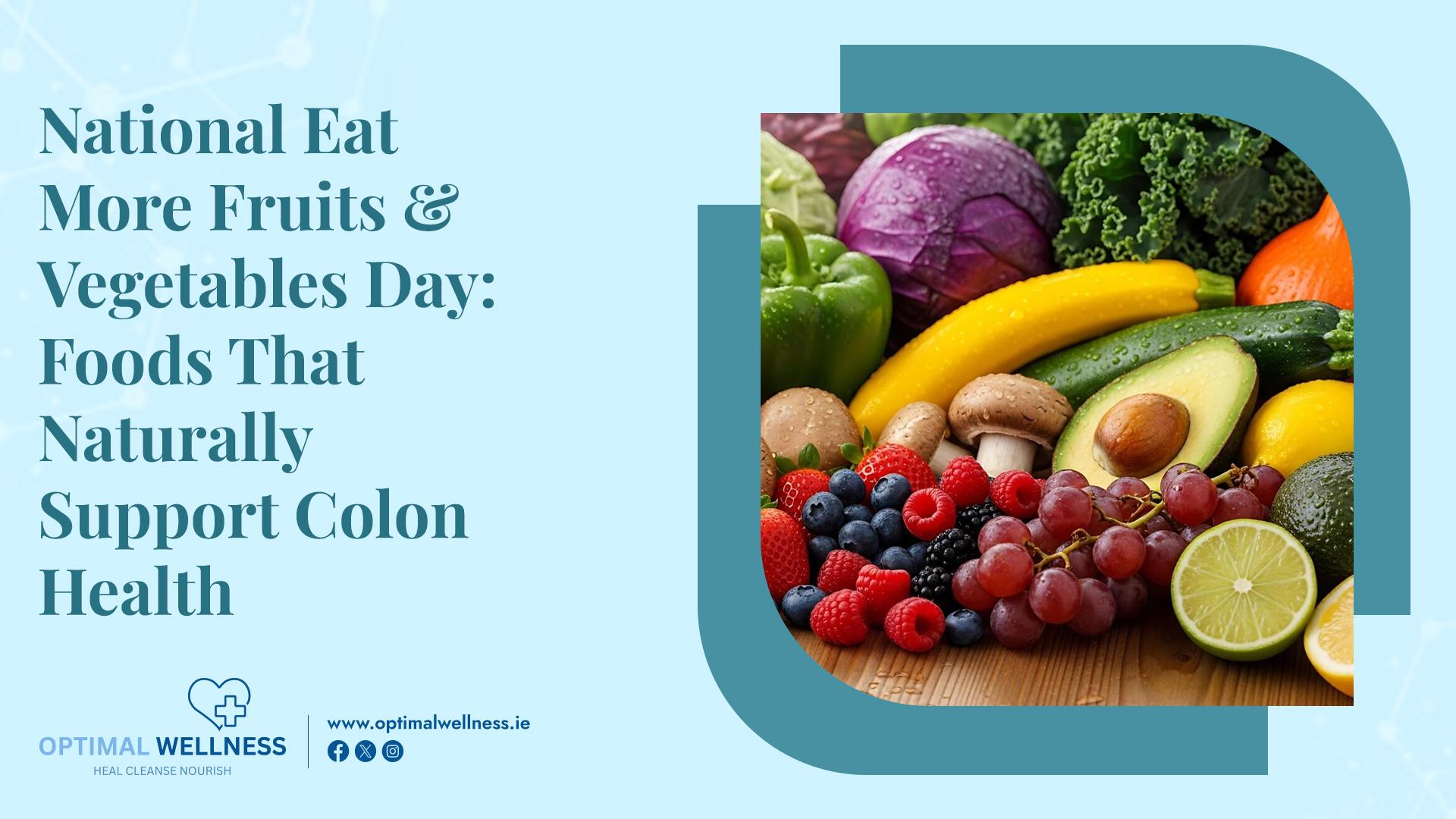
When it comes to improving digestive health, one of the simplest and most powerful changes you can make is eating more fruits and vegetables.
Yet despite hearing this advice for years, many people still struggle to get enough colourful plant foods into their daily routine. Busy lifestyles, convenience foods, takeaway meals, stress, and lack of preparation often mean vegetables become an afterthought rather than the foundation of good health.
National Eat More Fruits & Vegetables Day on May 21 is the perfect reminder that nourishing your gut does not need to be complicated. Small, consistent changes can have a huge impact on digestion, energy, skin health, immunity, and overall well being.
For many people, improving gut health starts with what is on the plate.
Why Your Colon Loves Fiber
Fruits and vegetables are packed with fiber, and fiber is essential for digestive health.
Fiber helps:
- Support regular bowel movements
- Feed beneficial gut bacteria
- Improve fullness and satiety
- Support healthy cholesterol levels
- Help balance blood sugar
- Encourage healthy elimination
Unfortunately, many adults eat far less fiber than recommended.
A low-fiber diet may contribute to:
- Constipation
- Bloating
- Sluggish digestion
- Energy crashes
- Increased cravings
Did you know? Most people only consume about half the fiber their body actually needs each day.
Your Gut Bacteria Need Feeding Too
Inside your digestive system live trillions of bacteria, often referred to as the gut microbiome.
These bacteria influence much more than digestion. Research continues to explore their role in:
- Immunity
- Mood
- Hormones
- Metabolism
- Energy
- Skin health
The foods you eat directly affect the health of your gut bacteria.
Highly processed foods and excess sugar may feed less beneficial bacteria, while fibre-rich foods nourish the helpful microbes your body depends on.
Foods That Feed Healthy Gut Bacteria
- Garlic
- Onions
- Leeks
- Bananas
- Oats
- Apples
- Asparagus
- Lentils
These are known as prebiotic foods because they feed beneficial bacteria.
Quirky Fact:
Your gut bacteria produce compounds called short-chain fatty acids when they digest fiber — and these compounds help support colon health.
The Best Vegetables for Colon Health
Vegetables provide fiber, antioxidants, water, vitamins, and minerals that support digestion and elimination.
Excellent choices include:
- Broccoli
- Spinach
- Beetroot
- Courgettes
- Carrots
- Kale
- Brussels sprouts
- Cabbage
Leafy greens are especially rich in magnesium, which may help support bowel regularity and relaxation.
Beetroot contains natural plant compounds that support circulation and liver function.
Fruit Is Not the Enemy
Many people unnecessarily fear fruit because of sugar content, but whole fruits contain fiber, antioxidants, and hydration that support health.
Some of the best fruits for digestion include:
- Kiwi fruit
- Pears
- Apples
- Berries
- Pomegranate
- Papaya
Kiwi fruit is particularly interesting because studies suggest it may help support healthy bowel movements naturally.
Did you know? Strawberries are not technically berries, but bananas are.
Eating the Rainbow
Different colored fruits and vegetables provide different health benefits.
Red Foods
Support antioxidants and heart health.
Examples:
- Tomatoes
- Strawberries
- Red peppers
Orange Foods
Rich in beta-carotene and vitamin A.
Examples:
- Carrots
- Sweet potatoes
- Butternut squash
Green Foods
Support detoxification and mineral intake.
Examples:
- Spinach
- Kale
- Broccoli
Purple Foods
Contain polyphenols that support gut bacteria.
Examples:
- Blueberries
- Purple cabbage
- Blackberries
The more color on your plate, the more variety of nutrients you provide your body.
Easy Ways to Eat More Vegetables
Many people think healthy eating needs to be complicated, but simple changes work best.
Easy ideas include:
- Add spinach to smoothies
- Include salad with lunch
- Snack on cucumber and hummus
- Roast extra vegetables at dinner
- Add grated carrots to sauces
- Blend vegetables into soups
- Keep chopped vegetables visible in the fridge
Preparation is often the key to success.
Hydration Matters Too
Increasing fiber without drinking enough water may actually worsen bloating and constipation.
Water helps fiber move through the digestive tract properly.
Simple hydration ideas:
- Start the day with warm lemon water
- Drink herbal teas
- Add mint or cucumber to water
- Carry a reusable water bottle
Did you know? Mild dehydration can affect concentration, digestion, and energy levels.
Colon Hydrotherapy and Healthy Habits
Many people choose colon hydrotherapy as part of a broader digestive wellness routine.
Supporting the body with hydration, fiber-rich foods, movement, and stress management alongside colon hydrotherapy may help people feel lighter and more energized.
Clients often become more mindful of nutrition and healthy habits after focusing on digestive wellness.
Protein Is Important Too
While fiber is essential, balanced meals should also contain adequate protein and healthy fats.
Protein helps support:
- Muscle maintenance
- Blood sugar balance
- Satiety
- Energy levels
Great protein options include:
- Eggs
- Fish
- Cottage cheese
- Greek yoghurt
- Chicken
- Lentils
- Lean meats
Healthy fats are equally important.
Include:
- Olive oil
- Avocados
- Nuts
- Seeds
- Oily fish
Supplements That May Support Gut Health
Supplements should support — not replace — a healthy diet.
Popular digestive wellness supplements include:
- Probiotics
- Magnesium
- Omega-3 fish oils
- Digestive enzymes
- Vitamin D
Magnesium may support bowel regularity, relaxation, and sleep.
Probiotics may help support microbial balance, especially after stress, antibiotics, or poor dietary habits.
A Simple One-Day Gut-Friendly Meal Plan
Breakfast
Overnight oats with chia seeds, berries, and Greek yoghurt
Lunch
Chicken salad with olive oil dressing and mixed vegetables
Snack
Apple slices with almond butter
Dinner
Salmon with roasted broccoli, carrots, and sweet potato
Evening
Peppermint tea
Simple meals are often the most sustainable.
Lifestyle Habits Matter Too
Digestion is influenced by more than food alone.
Other important habits include:
- Walking daily
- Managing stress
- Sleeping well
- Chewing food thoroughly
- Eating slowly
- Reducing ultra-processed foods
Even short walks after meals may support digestion and blood sugar balance.
National Eat More Fruits & Vegetables Day is a reminder that good health often starts with simple daily habits.
Eating more colorful whole foods can support digestion, gut bacteria, elimination, energy, and overall well being.
You do not need a perfect diet to improve your health. Small changes repeated consistently over time can make an enormous difference.
Your gut works hard for you every day — feeding it well is one of the best investments you can make in your long-term health. Get in touch with Optimal Wellness today!